Why a Micro Gear Flow Meter is the Best Choice for Kerosene Measurement
When it comes to measuring low-viscosity fluids like kerosene, accuracy and reliability are non-negotiable. In industries ranging from aerospace testing to precision fuel dispensing, engineers face a common challenge: how to measure small, steady flows of hydrocarbons without compromising precision or durability.
The answer lies in the
micro positive displacement gear flow meter. In this article, we explore why this technology is the go-to solution for kerosene flow monitoring, and how our latest model is setting new benchmarks in performance.
The Challenge of Measuring Kerosene Flow
Kerosene is a low-viscosity liquid (typically around 2–5 cP). While it flows easily, it can be difficult to measure accurately at micro-flow rates. Traditional flow meters often struggle due to low viscosity slippage, poor signal stability, or incompatibility with fuel chemicals.
For applications like lab research, catalyst injection, or aviation fuel calibration, operators need a mini flow meter that can handle flow rates as low as 15 mL/min and as high as 200 mL/min with superior consistency. This is precisely where micro gear flow meters shine.
Customer's Real-World Application Parameters:
Media: Kerosene
Viscosity: 5cp
Flow Rate: 15~200mL/min
Accuracy: 1%
Temperature Resistance: -30-80℃
Pressure Resistance: 32bar
Signal Output: NPN Pulse Output
Power Supply: 4-26VDC
Housing Material: Anodized Aluminum
Gear Material: PPS
Connection Specification: G1/8 Internal Thread
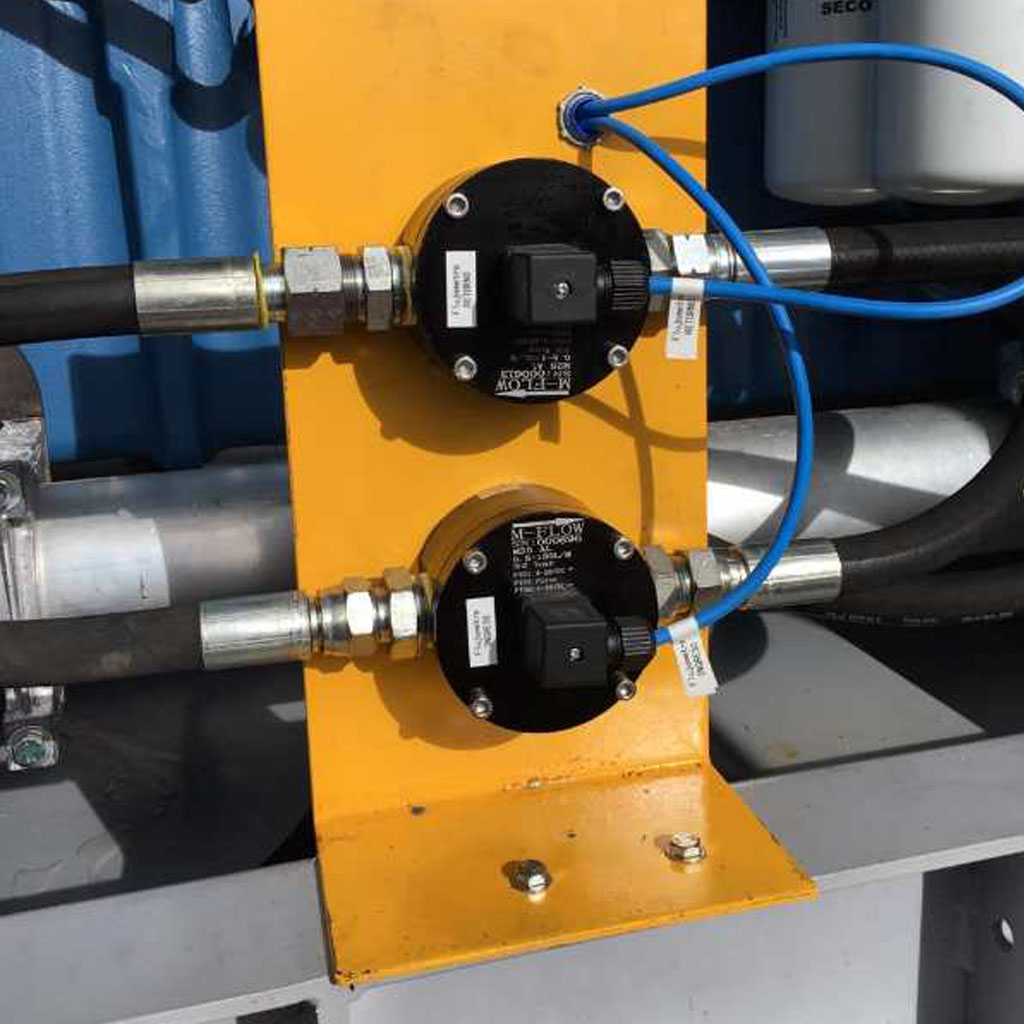
Key Performance Features of Our Kerosene Flow Meter
Our latest micro gear flow meter is specifically engineered for demanding liquid hydrocarbon applications. Here is why it stands out:
1. Exceptional Accuracy (1%)
Precision is the heart of any metering task. With a measurement accuracy of ±1%, this gear flow meter ensures that every drop of kerosene is accounted for. Whether it’s for process control or billing, this high precision gives operators absolute confidence in their data.
2. Optimized for Low Viscosity
Designed specifically to handle fluids with a viscosity of up to 5 cP, this meter ensures reliable meshing of the gears. Since kerosene is non-lubricating compared to oils, the specialized materials we use guarantee a long service life without component degradation.
3. Reliable Signal Output
In the age of Industry 4.0, digital feedback is a must. This meter provides a clean NPN pulse output signal, allowing seamless integration with PLCs (Programmable Logic Controllers) and data acquisition systems. This makes real-time monitoring and remote flow control easier than ever.
4. Robust Construction and Durability
The instrument is built to survive harsh conditions. Featuring a housing made of anodized aluminum, it offers excellent corrosion resistance. The internal gear material is PPS (Polyphenylene Sulfide), a high-performance engineering plastic known for its dimensional stability and resistance to chemicals.
Withstanding the extremes, this
flow meter operates reliably in temperatures ranging from -30°C to 80°C, and holds up to a maximum pressure of 32 bar. This makes it robust enough to handle pressurized fuel lines safely.
5. Flexible Power and Installation
Powered by a wide voltage input of 4 to 26 VDC, it can be easily deployed with various power supply systems. The G1/8 internal thread connection allows for compact and leak-proof installation, saving valuable space in confined mechanical or laboratory setups.
Where to Use this Micro Gear Flow Meter?
Because of its compact footprint and remarkable sensitivity, this meter is an ideal fit for:
Fuel injection test benches in automotive R&D.
Aircraft fuel system calibration and maintenance.
Chemical dosing and injection systems that require minute quantities of hydrocarbons.
Laboratory experiments requiring ultra-low flow rate data logging.
Conclusion
When you need to measure small flow rates of kerosene, don’t settle for standard flow sensors that can't handle the viscosity or the pressure. Choose a micro gear flow meter designed with precision materials, robust electronics, and a wide operating range.
From its PPS gears to its anodized aluminum body, every component is selected to ensure you get durable, repeatable, and highly accurate measurements for years to come.
whatsapp:86 18049841995
